
In January my corner of the social web was abuzz with the surprising announcement at Davos of a new social network: W Social, which aspires to be an alternative to X, based in Europe, with "identity verification to fight disinformation." Its goal? To foster social sovereignty for European citizens, away from the control and influence of U.S. tech behemoths.
There was a lot of ambiguity surrounding the announcement with implications that this may be an initiative driven by European politicians. Was the European Commission involved? Would governments be funding a new social platform for European citizens that required ID verification? It was hard to tell.
Meanwhile, many European newspapers, blogs, radio and TV stations covered this announcement extensively, with great enthusiasm - day after day for what seemed like a full week. Most of the reporting seemed to be a simple rehashing of a press release.
It took me about 5 minutes of research to start uncovering some really surprising elements. The contrast between the media hype and the reality was so jarring, that I decided to start collecting evidence and share what I found in a blog post.
With my article today I aim to share the reality behind the hype, doing the work that journalists should have done at the beginning.
This article represents my personal opinions, commentary, and conclusions formed through independent research using publicly available sources. Any characterizations, interpretations, or inferences are presented as opinion, not as statements of objective fact. Readers are encouraged to review the referenced materials and draw their own conclusions.
Why should YOU care?
World events from the past two years have pushed a lot of European leaders to start reassessing Europe's dependence on American tech infrastructure.
European politicians and policy experts have started holding meetings to discuss "Trusted European Platforms (TEPs) to strengthen Europe’s strategic autonomy." W Social is being mentioned in these discussions:
 Stars4Media Project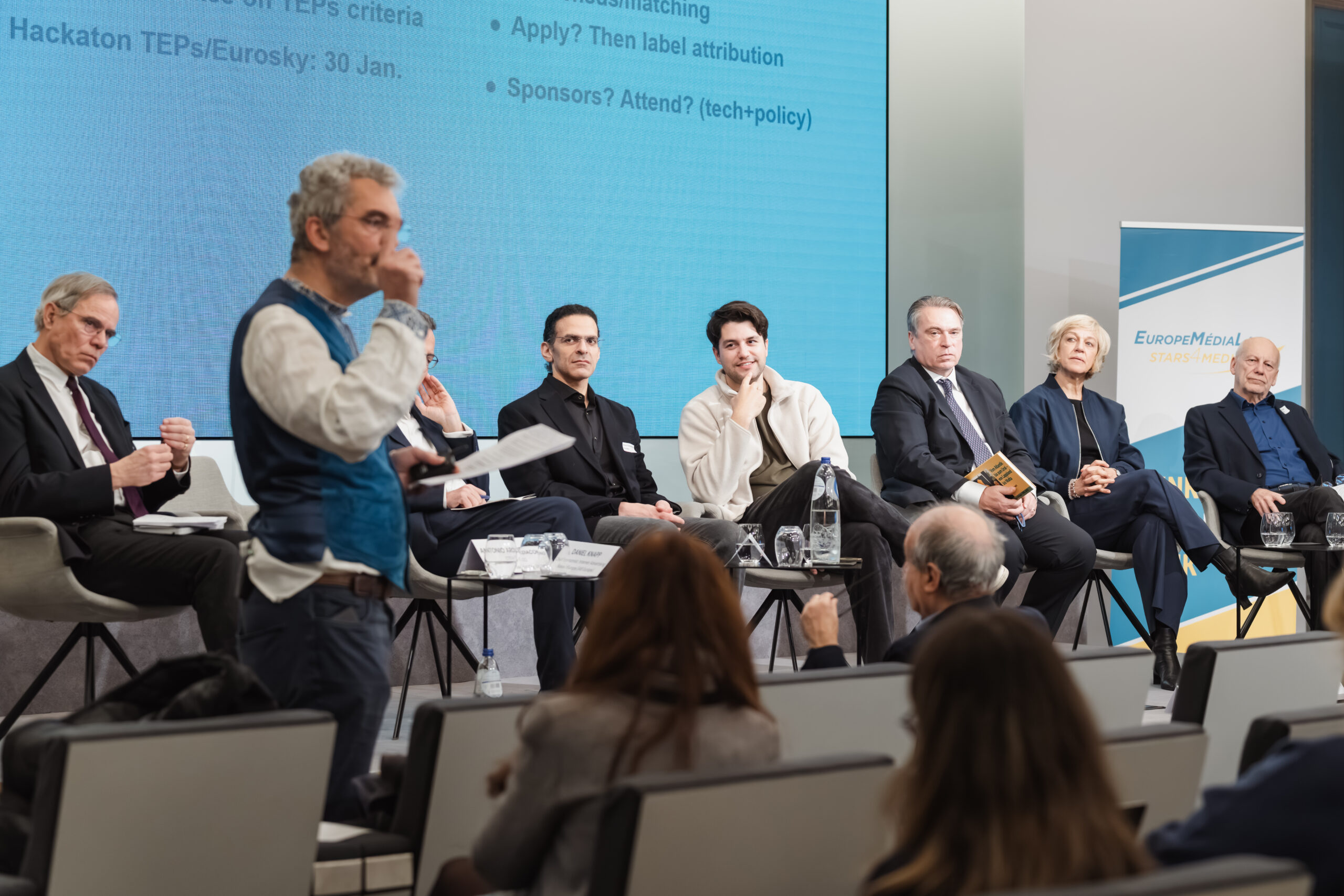
I understand that doing due diligence requires time and technical expertise.
I would like to collect in this post all the evidence I found of why I personally don't think W Social is a solution for Europe’s digital sovereignty.
If anything, we should exercise critical thinking, follow the money and analyze who has control over social media platforms. It is no coincidence that tech oligarchs in the U.S. have been on a media purchasing spree, scooping up newspapers, TV stations and social media networks - especially in the past 4 years. Controlling the flow of information is a potent thing - and we should be very careful of whom we give that power to.
A word from the author
Before we get started, why should you listen to me?
Well, I have been very active on decentralized social networks for four years now, championing these online spaces over centralized offerings by Big Tech platforms.
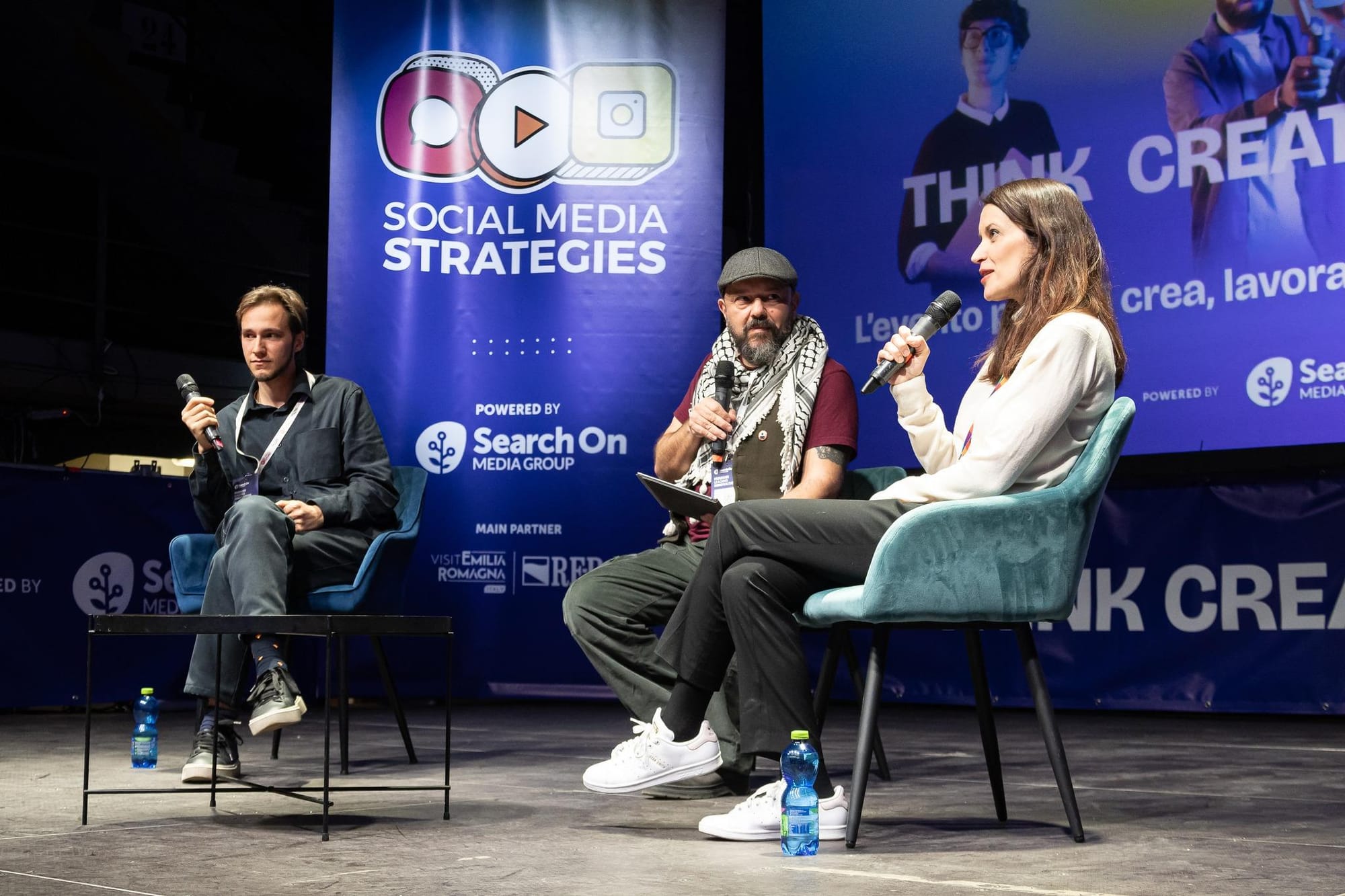
I have been invited to speak about my views and experiences at Journées du Logiciel Libre in Lyon, PublicSpaces in Amsterdam, Berlin Fediverse Day, Social Media Strategies in Bologna and this past month I gave a talk at the Ministry of Culture in Paris and delivered the opening keynote at 2MR in Hamburg.
In addition to my advocacy, I have been self-hosting my own social media platforms (GoToSocial, PeerTube and Pixelfed instances) and I’ve set up essential services like NextCloud… purposefully using domain name registrars, web and VPS hosting companies based in Europe.
The topics of open social networks, FOSS alternatives to Big Tech platforms and European cloud infrastructure are my bread and butter.
I have been alarmed by the hype around the launch of W Social and all the inaccuracies in news reports. Thus my speaking up.
Issue no.1: How W Social ignored existing European initiatives
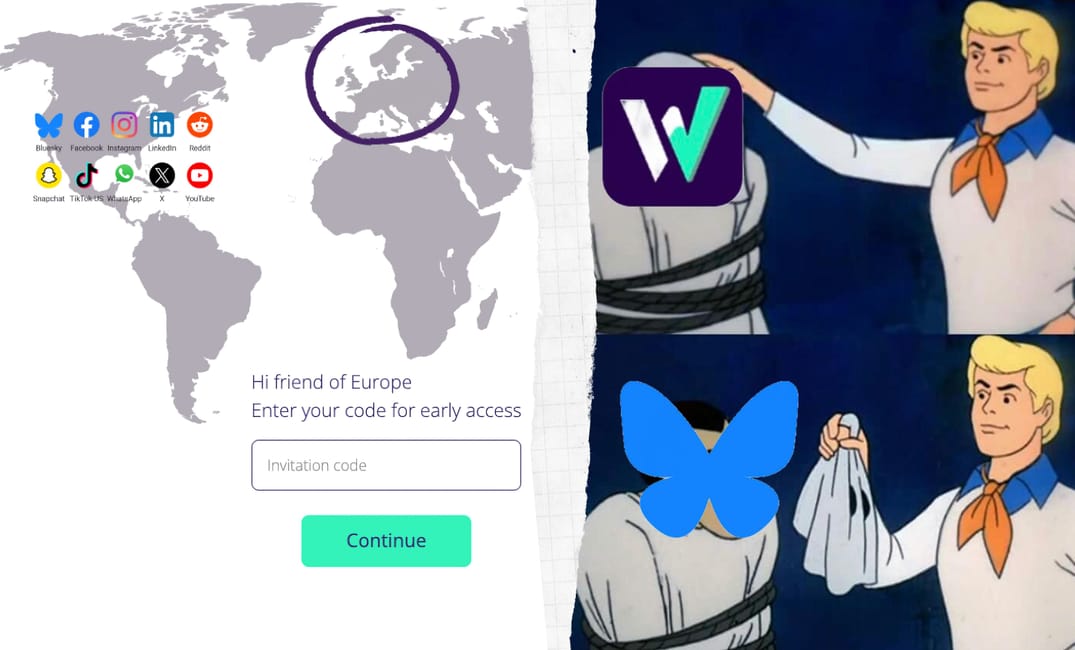
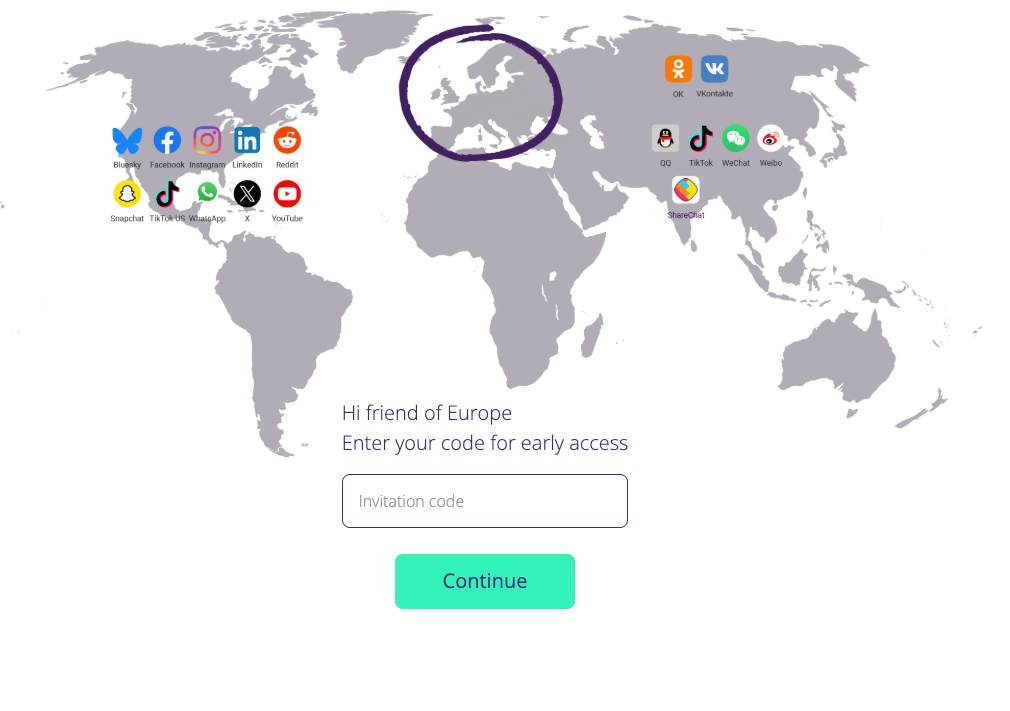
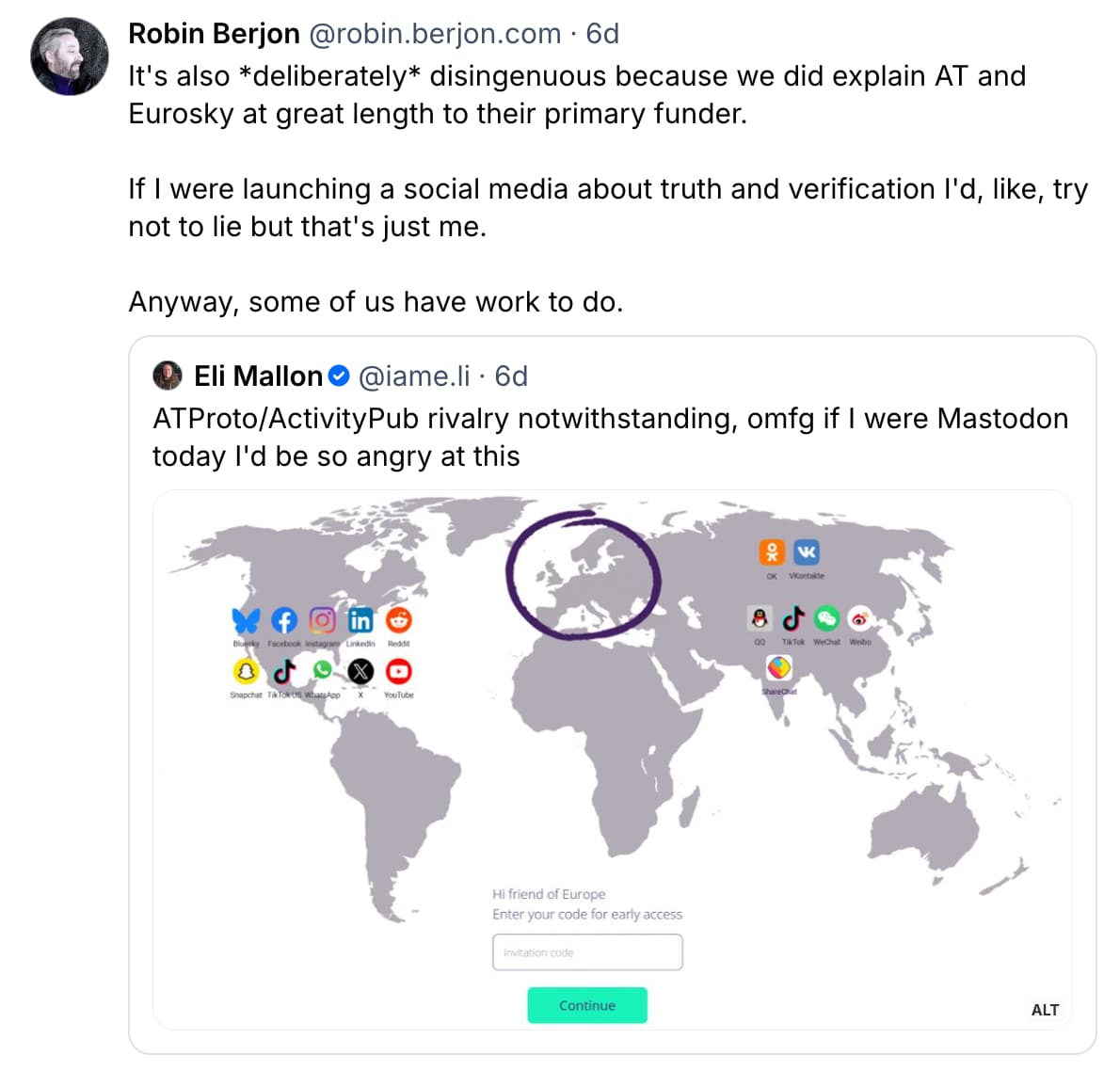
People in my circles discussed the announcement of W Social with disbelief and a touch of anger. At launch, the official website of W Social showcased a world map, with icons of American tech platforms (Bluesky, Facebook, Instagram, LinkedIn, Reddit, Snapchat, TikTok US, Whatsapp, X and YouTube) superimposed over the map of the United States; then over Russia you can see the logos of OK and Vkontakte, over China there is QQ, TikTok, WeChat and Weibo, and over India there is ShareChat. A circle is drawn around Europe... but there are no icons inside. The message: W Social is here to fill that void and provide a European social network.
This provoked the ire of many of my friends and fellow Fediverse netizens - because decentralized social media platforms like Mastodon and PeerTube originated in Europe; the Fediverse has over 12 million users. Omitting this felt like a strange choice. Even the European Commission has an active Mastodon account: on their own server, with over 154,000 followers!

While most people focused their frustration on that omission, I thought of something else entirely: for months I had been hearing about the development of Eurosky, based on Bluesky's ATproto.
A mission statement, from Eurosky's website (a note: I grabbed this text in January and the page has since changed. But you can see the original courtesy of the Internet Archive):
Eurosky is building the future of social media - open, pluralistic, and made in Europe. We believe social media should serve our economies and societies, not monopolies. Eurosky is a public-interest infrastructure project that puts control in the hands of users, businesses, and European society. By combining European cloud infrastructure with open standards and democratic governance, we’re creating a new ecosystem where innovation thrives, moderation is transparent, and no single company or country can dictate the rules.
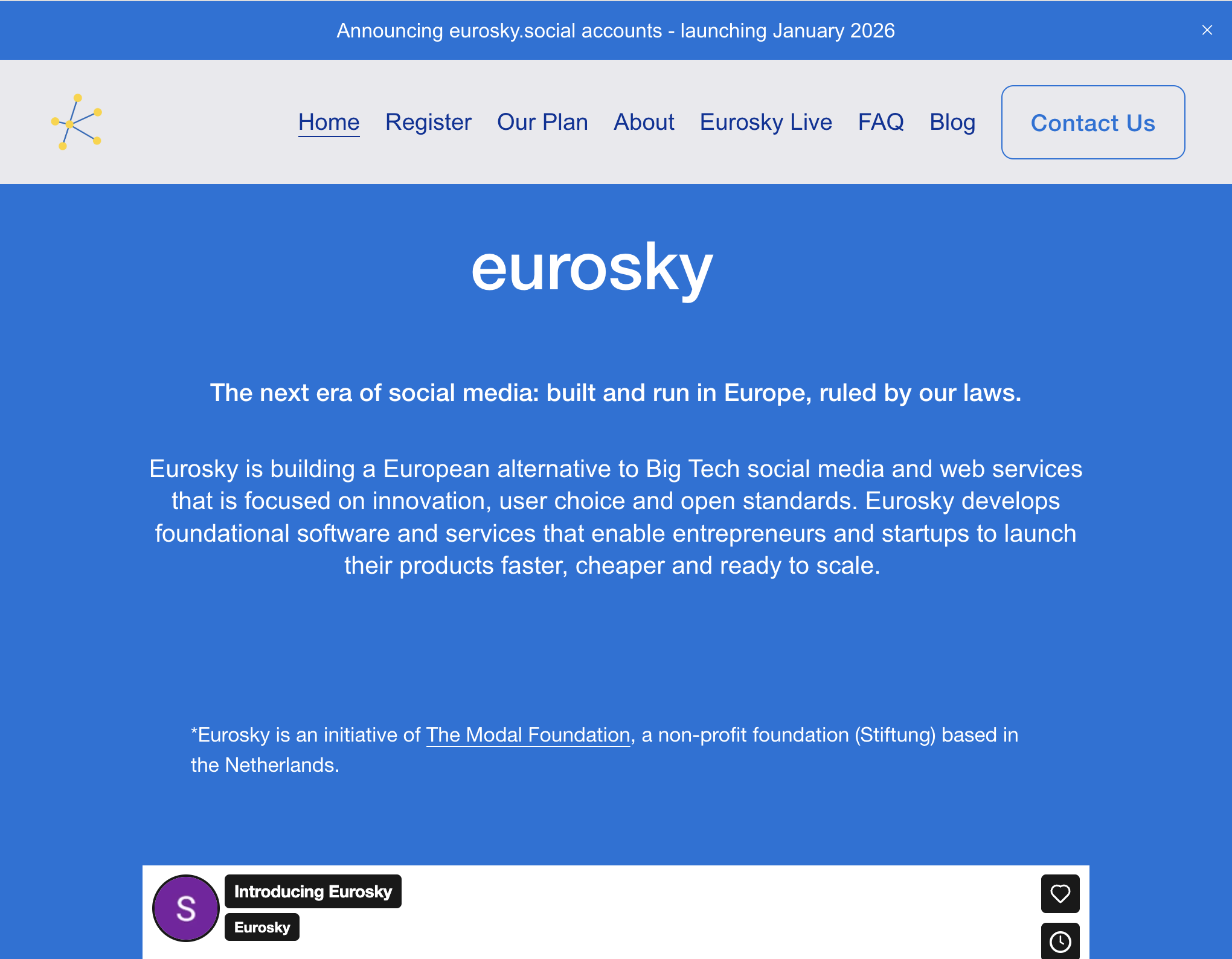
By reading articles about W Social, you could easily think journalists were discussing Eurosky. The two platforms are so eerily similar in their stated goals, that when I heard that a new European social platform was launching to rival X, when I read it was called "W Social" my first thought was that Eurosky must have rebranded and changed its name. After all, it was supposed to launch in January 2026 and the announcement of W Social was made in Davos on January 20th 2026.
Oh no. They are two completely different initiatives.
Here is what Robin Berjon - one of the architects of Eurosky - had to say about W Social:
While the two initiatives share similar goals, their execution could not be more different.
Eurosky has been slowly and carefully planned out, online and behind the scenes. Its website is sleek and professional, with extensive information explaining what the project is about, team bios, a timeline of objectives. When French and German political leaders met in Berlin in November 2025 at the Summit on European Digital Sovereignty to discuss European tech sovereignty plans, Eurosky team members organized their own conference in Berlin as a "side event", in order to show policy makers what they were working on. This is a very well prepared team of experts.
By contrast, if you visited the website of W Social on its launch day, all you had was a rudimentary landing page with a map of Europe and the invitation to enter an invite code. Any 14-year-old with an hour to spare and a free Canva account could have designed something more professional looking.
Now the page has been updated with a slightly sleeker design for its landing page but it is still lacking any content (as of May 7th, 2026):
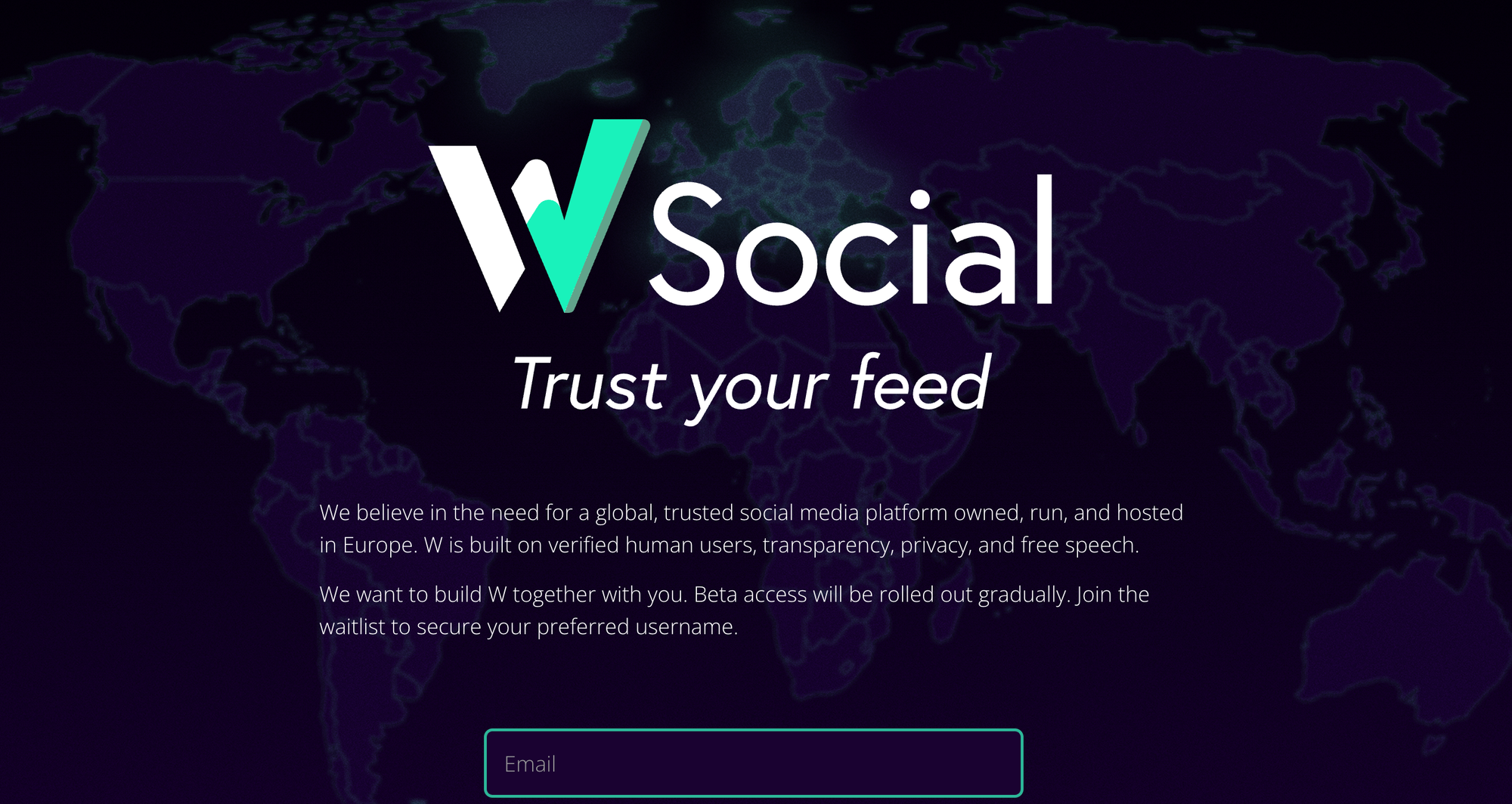
W Social's announcement at Davos felt very rushed, with minimal preparation just to get the word out there about their plans and get a leg up in the news cycle about European platforms as alternatives to Big Tech offerings from Silicon Valley.
With work on Eurosky being well under way (they eventually opened migrations to their server from Bluesky in February), I kept wondering: "Why? What is the point of W Social, another European fork of Bluesky?" And then everything clicked: maybe W Social is banking on mandatory age verification for European users in order to use social media. This could be their "leg up" over Eurosky: the need for an official government ID to open an account and use it.
Issue no.2: W Social's bungled attempt to conceal they are using Bluesky's AT Protocol
How will W Social work? Which technology will it employ to power its revolutionary European social network?
You would think journalists would ask these questions.
Sadly, that wasn't the case.
Online sleuths discovered the page stage.wsocial.eu that revealed WSocial is none other than a fork of Bluesky, thus based on ATProto.
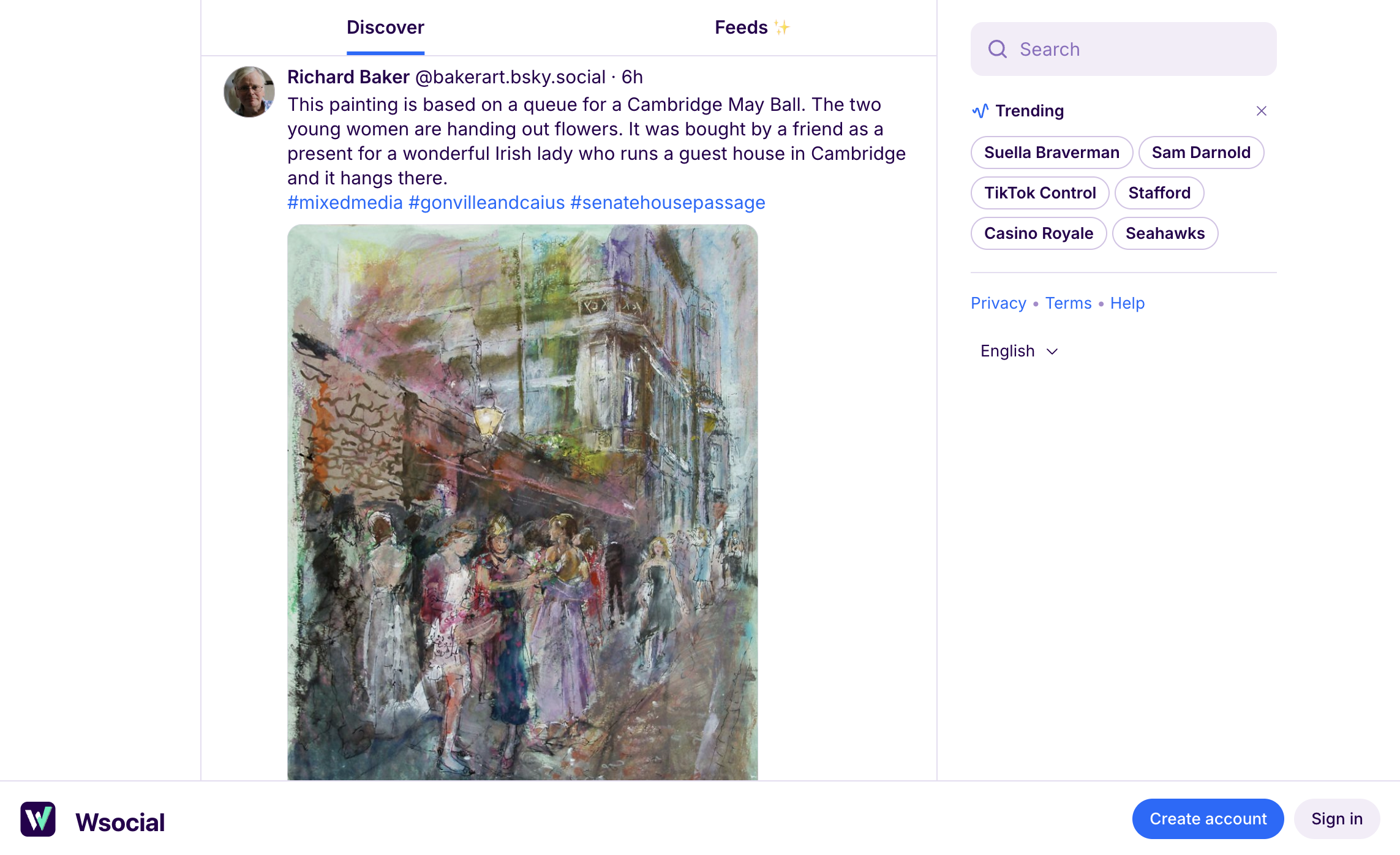
Developers typically test out platforms on a staging website before launching or going in production... the staging page for W Social was exactly like the Bluesky login page. If you clicked on the "x" to close that preview window, you would see a Bluesky feed:
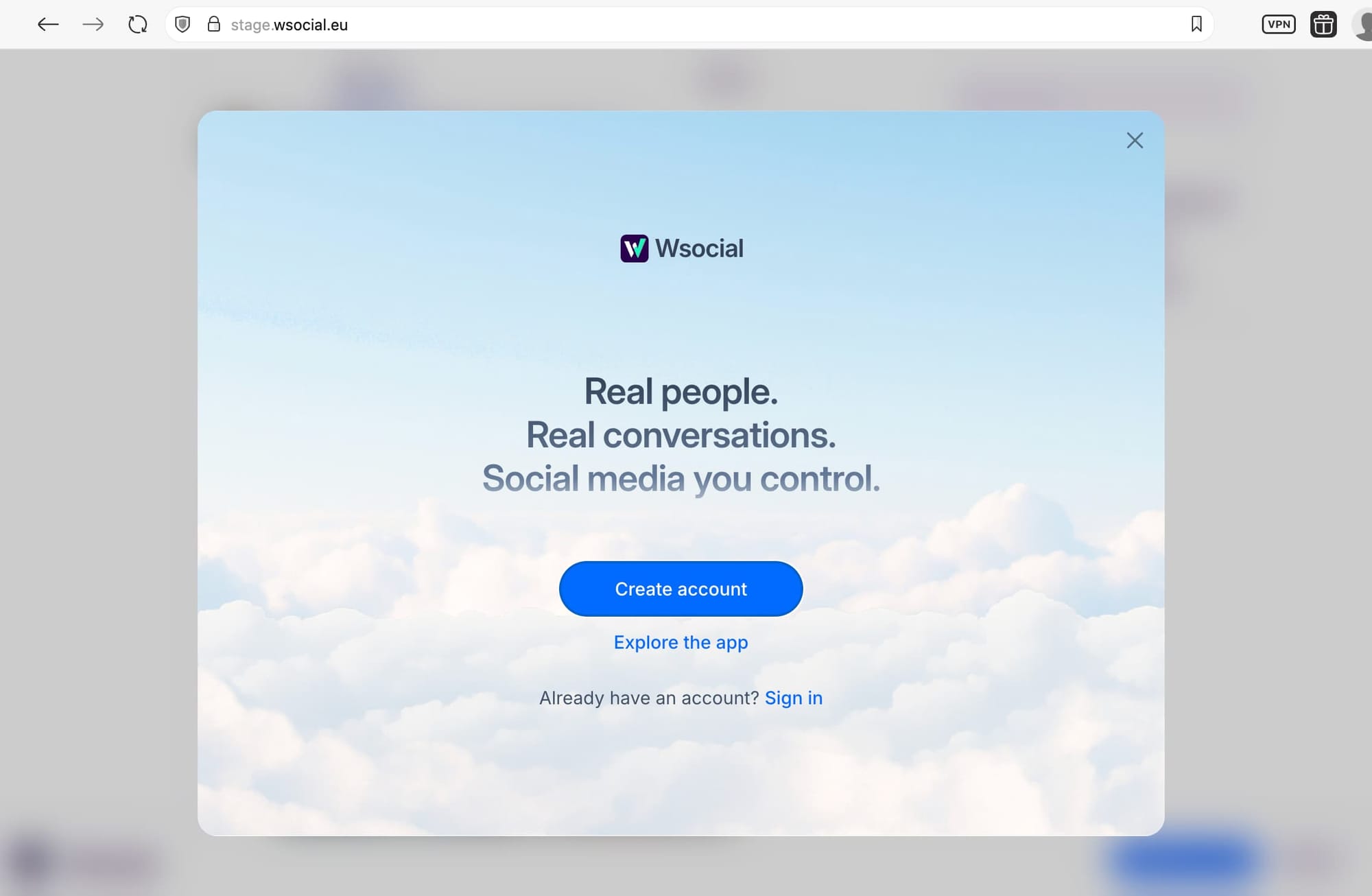
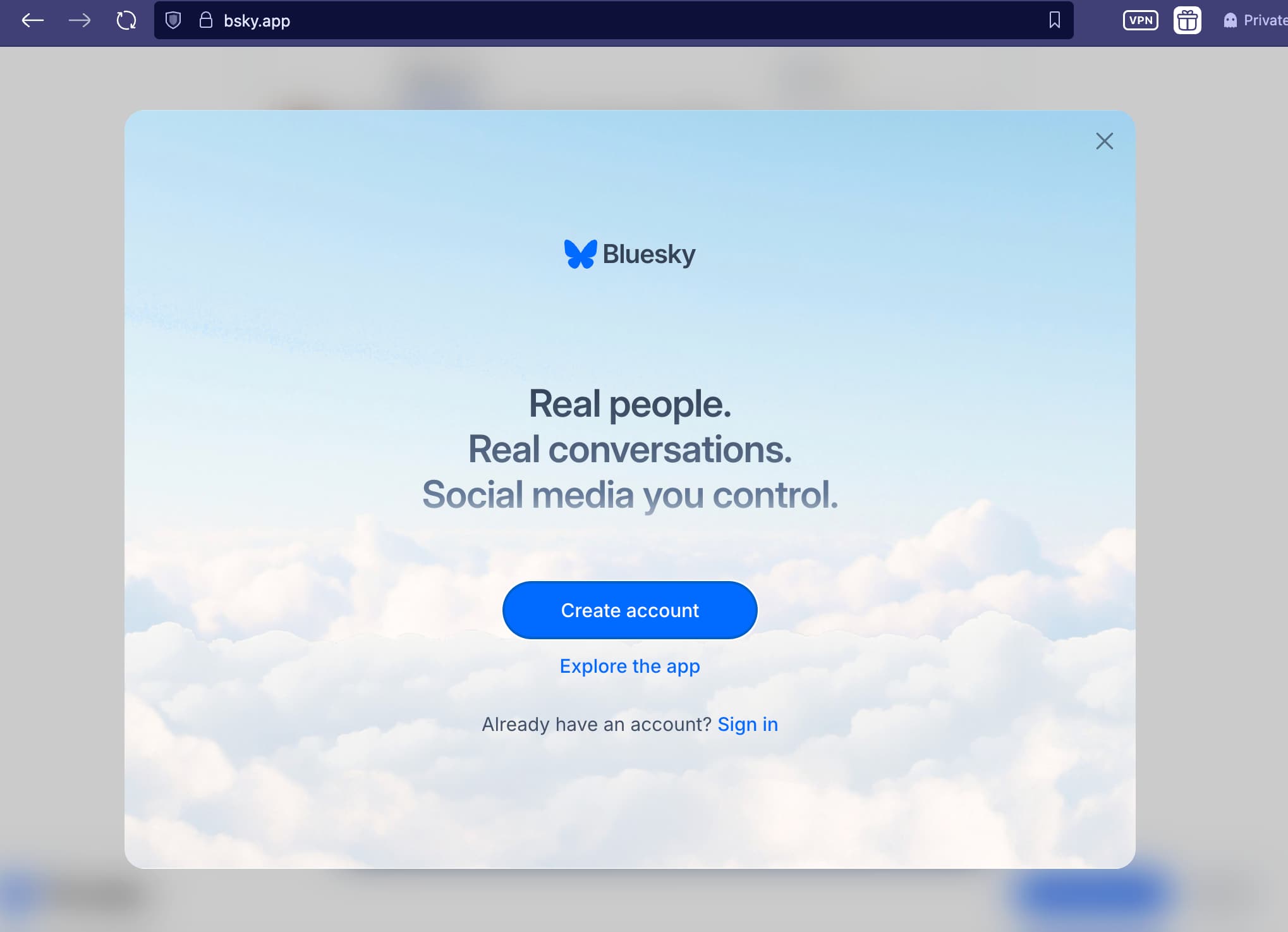
screenshots putting the landing page of Bluesky and the staging page for W Social side by side...
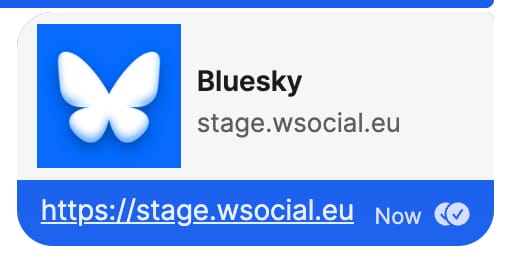
That page was active for a few days: if you shared a link to it from Signal for example - like I did - you would see a preview card with the Bluesky logo. So much for calling out Bluesky and conflating it with other Big Tech offerings by Meta and ByteDance.
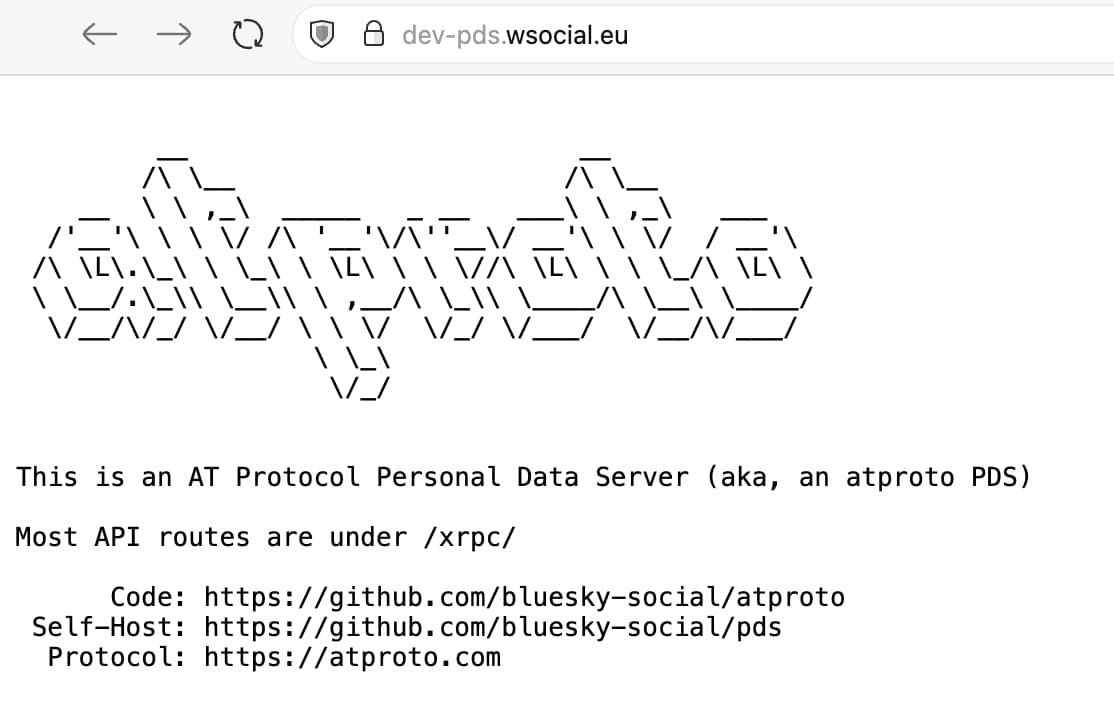
Additional proof: the URL dev-pds.wsocial.eu which showed the ATproto logo and stated "this is an AT Protocol Personal Data Server" (the two URLs have since been migrated):
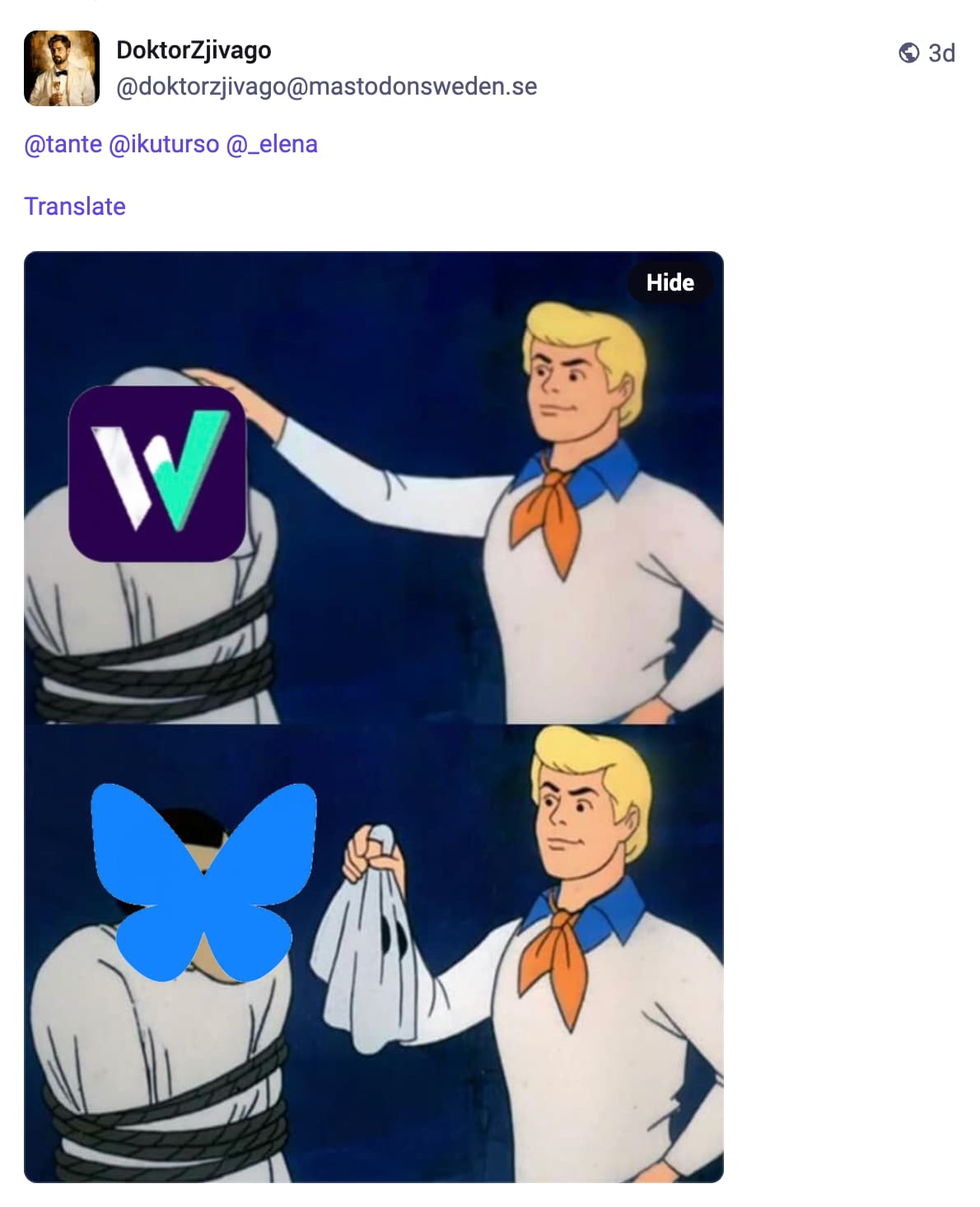
This Scooby-Doo unmasking meme shared by DoktorZjivago on Mastodon is a perfect illustration for this:
I'm guessing that after catching some flack online – regarding their high aspirations of having a European tech stack but picking the American Bluesky and their protocol – someone in charge of W Social commanded that their staging website scrap all evidence of ATproto.
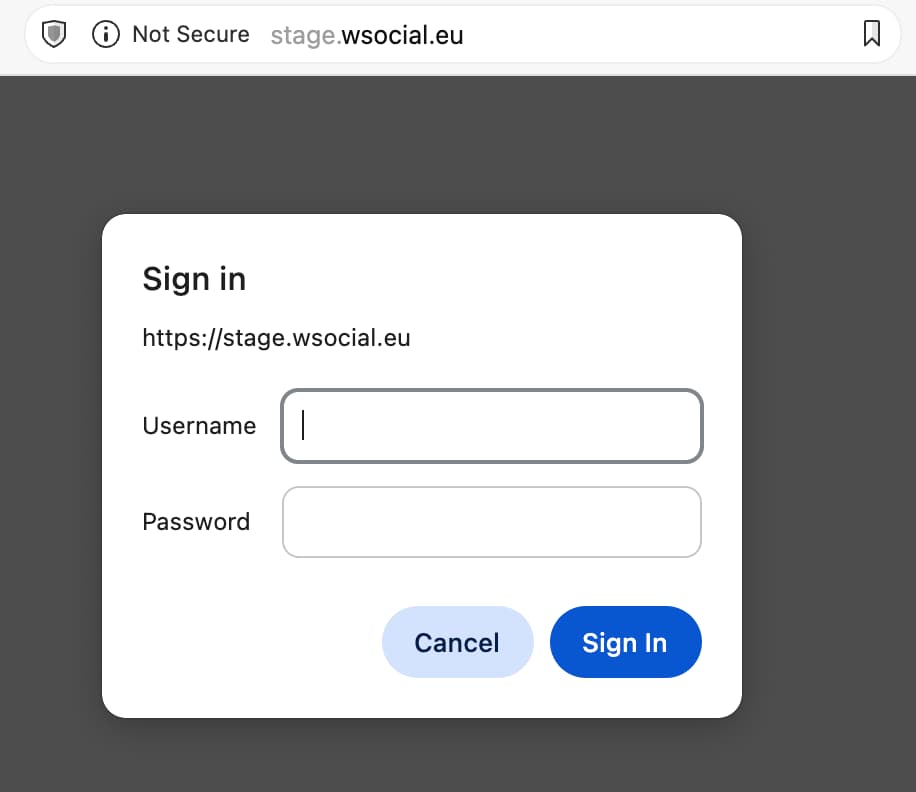
So the stage.wsocial.eu webpage a few days after the official announcement looked like this:
Issue no.3: W Social's cavalier attitude towards online security
Did you notice anything wrong in the previous screenshot?
Well, the operation scrapping of all Bluesky branding resulted in the loss of the page's SSL certificate.
This is a LOGIN page into their system.
Why is it bad? Well, when you type a password into a webpage that doesn't have a working SSL certificate, the connection between your browser and the website is unencrypted. That means the password travels as plain text across the Internet.
Did I mention that W Social's value proposition is verified identity and they will require a government ID to create an account? They are asking for your most sensitive data... and yet have a cavalier attitude towards security.
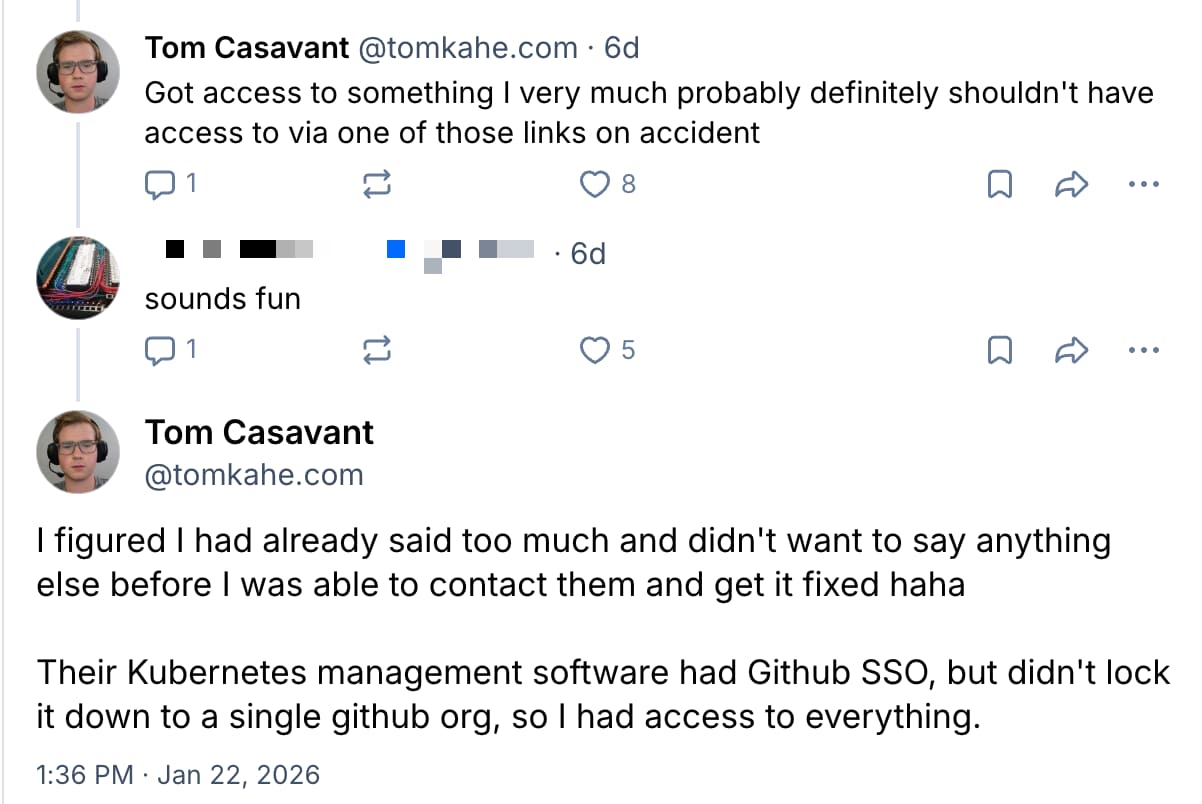
On announcement week, Tom Casavant shared these messages on Bluesky about W Social and its dev-pds.wsocial.eu page (I'm sharing this with Tom's permission):
How bad is this?
Potentially catastrophic if the wrong person could so easily gain access into their system.
Am I theorizing about things that may never happen? Sure. But we should all be very careful about the organizations we trust with our most sensitive data. A few months ago a Discord data breach exposed the government IDs of 70,000 users:
 Guru Baran
Now, I have heard through the grapevines (and read confirmation in the press - more on this later) that W Social hired a team of software engineers and now have more than 20 employees, so I think they are taking things more seriously. Still, their early blunders were really shocking to me.
Issue no.4: the founders or: who are we trusting with our communications?
W Social is being built by a Swedish company called W Social AB, which is a subsidiary of We Don't Have Time, a climate-focused media platform. The W Social project is led by Anna Zeiter, a Swiss privacy expert who previously served as Chief Privacy Officer at eBay for more than a decade; she holds a PhD in law from the University of Hamburg. Not the typical background for a tech founder.
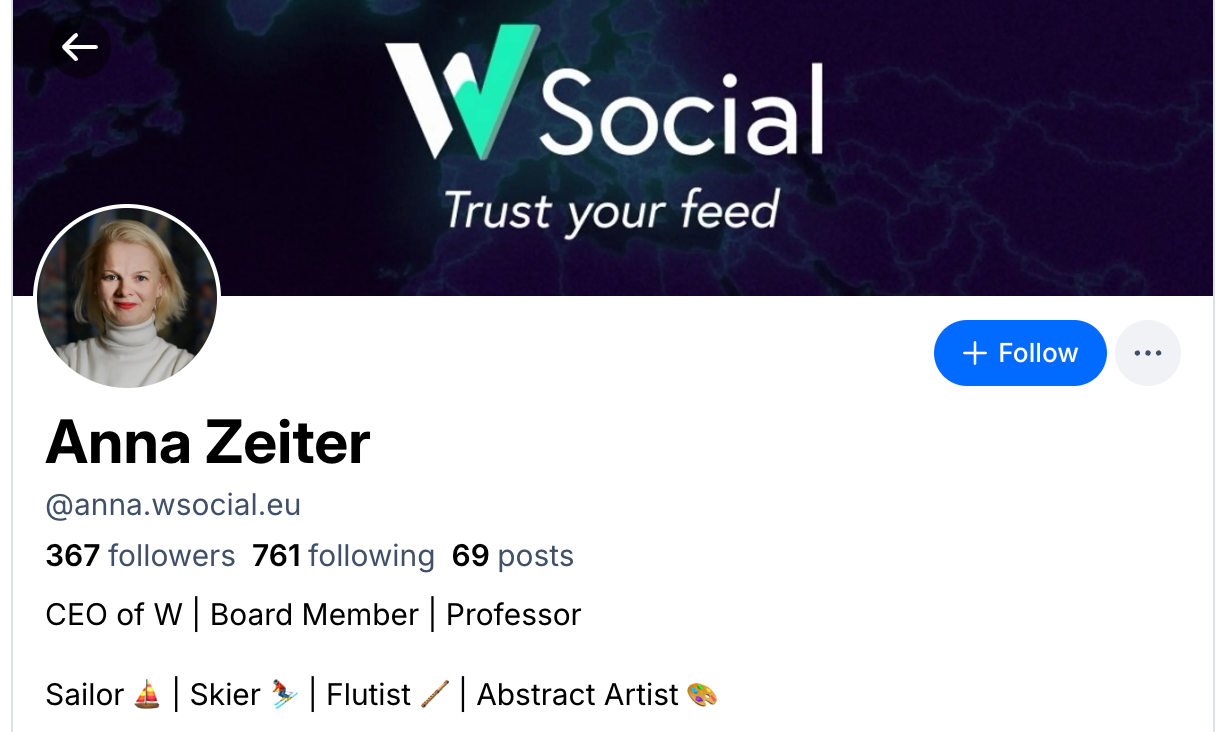
According to an article on Impact Loop, W Social received 2.5 million Euros in funding and has a team of 25 people. Its board of advisors includes very powerful, well-connected people in the world of business and politics, including Cristina Caffarra (chair of EuroStack), Elizabeth Denham (former UK Information Commissioner), Sandrine Dixson-Declève (Honorary President of the Club of Rome), Yariv Adan (former Head of AI at Google), Pär Nuder (former Swedish Minister of Finance), Marc Placzek (former CPO at PayPal) and Philipp Rösler (former German vice-chancellor).
At Davos, Zeiter was interviewed during a We Don't Have Time segment and had a chance to talk about her intentions for the platform - the video was posted on X, but I am using the alternate site nitter.net to display it (so you won't need an X account to see it):
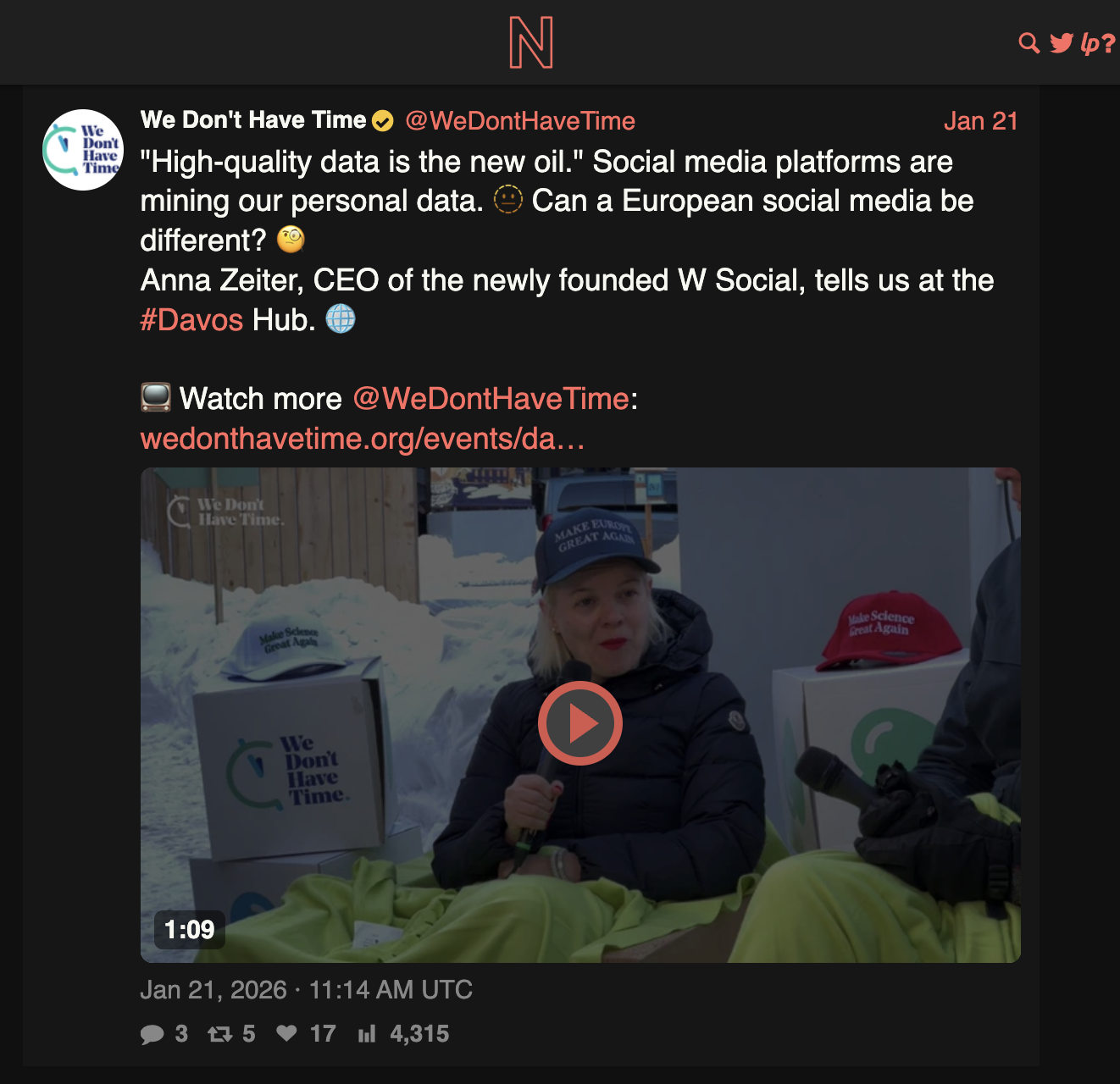
Direct link: https://nitter.net/WeDontHaveTime/status/2013933223651270938
Zeiter said:
Everything is data-driven. Ten years ago we said 'data is the new oil', right now we say 'high quality data is the new oil.' And this is what we are seeing, that competitors in the U.S. and China are using a lot of personal data to analyze, to target... and also sometimes to manipulate users. We want to be different in that respect. Of course, we want to respect GDPR and other European laws because we are run, built and governed in Europe and we would also like to give back to the users. We like to give for example, the face identification process, we want to make sure that users can govern their own data and also their own algorithms, so that users can really choose: "do I want to stay in my filter bubble?" or "do I want to see a little bit more of what is going on in society?" or "do I want to have the full spectrum?"
This is their pitch: a social media platform with a pick-your-own algorithm, that requires government ID to sign up.
What I take issue with here is the sentence "we are run, built and governed in Europe." Why hide that they are using the ATproto infrastructure to operate? Theirs is not a novel, completely original, built from the ground up platform. It is based on Bluesky's ATproto. And yet, this protocol has never been mentioned in any interviews.
Software engineer Maho Pacheco theorized:
I have strong suspicions about why W selected ATproto instead of Activity Pub. Basically there is more power in the biggest actors, a more "centralized" control, to ban/shadow-ban/censure and pull the plug. In other words it is more impactful when Bluesky sidebanned someone or some community than if mastodon.social would do it. The firehose/relay is a the biggest point of control. So in my opinion it is more interesting for investors to create a platform that can be controlled, even if it is just to introduce ads or control the discourse. Technically is because setting-up/supporting/maintaining the firehose/relay layer is very expensive. Every single message would flow through there; creating the biggest firehose in Europe is such a power. So, it is easier to be controlled, and very unlikely to be replicated by other entities.
Issue no. 5: lack of transparency
Following their surprise announcement at Davos, there were dozens of news reports in newspapers, radio shows and TV news shows about this "new European network that will replace X" - with strong implications that it may be an official initiative by the European Union.
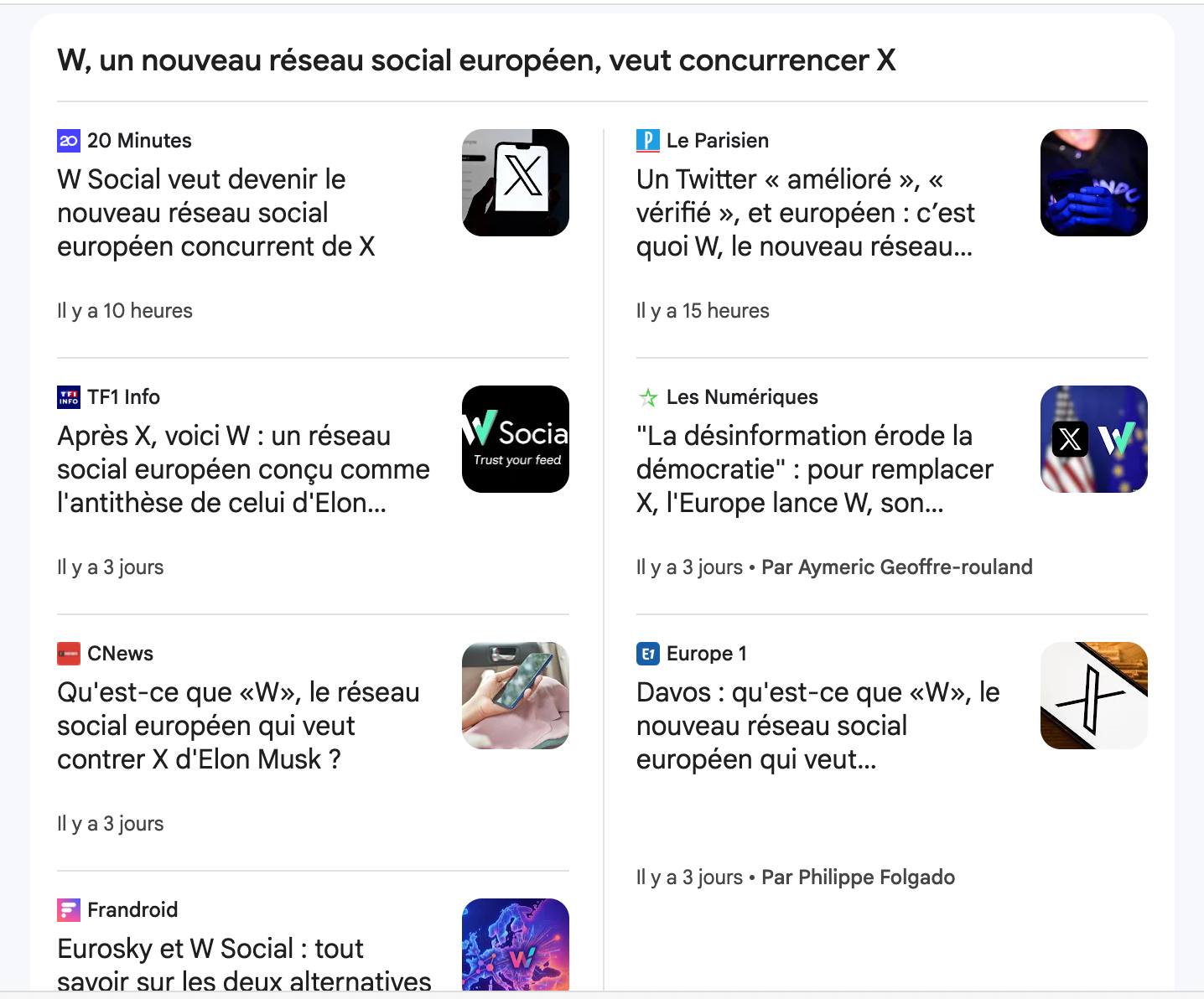
This went on for TEN DAYS - with zero fact checking by media organizations or corrections by the W Social founders.
The first news organization to fact check and debunk the myth of official involvement by the European Union was Euronews. In a segment for The Cube (which you could watch here), journalist James Thomas said:
Claims are spreading online like wildfire that the European Union is setting up its own social media platform to rival X. These posts have spread primarily on X itself, with thousands of views and say that taxpayers money will be used to set up W as an alternative to Elon Musk's platform. Some posts describe it as a state-run censorship platform that has receive funding from the European executive, but these claims are misleading. A European Commission spokesperson told The Cube that the EU is not launching, funding or operating any social media platform. There is no European-backed projected called "W".
This came ten days too late, with dozens of news reports legitimizing W as an official European alternative to X.
Let's do some role-playing here: if I were to launch a privately funded project that received extensive media coverage in newspapers, on the radio and TV, but with reports wrongly claiming that the government was behind it... well, the first thing I would do would be to contact journalists to rectify the mistake. I may even put text on my website to correct the assumptions.
W did not do that. I will always remember their silence on this.
I am not sure I can fully trust an initiative that lacked clarity and honesty on two crucial points:
- hiding that they are a fork of Bluesky;
- not correcting wrong claims about their origins, letting people believe that they are part of a European Union initiative - whereas in reality they are a private venture, funded by private investors.
And then there is the thorny issue of their required ID verification, the erosion of privacy and the end of internet anonymity. Em wrote an excellent article pointing out the problems with age verification laws for social media users - it is a must read and covers many of the reasons why government IDs to use social media is a very bad idea:
 Em
Em
The Electronic Frontier Foundation also has a superb piece about this topic:
 Rindala Alajaji
Final Thoughts
I have a lot more to say about this but I realize that in this post-literate era I have already written a very long post that will take time to read and fully digest. I will stop here - for now. W Social is set to launch tomorrow May 9th on Europe Day. As it happened when it was first announced in January, it is likely to receive a lot of uncritical, superficial press coverage. Please exercise critical thinking and try to look at the reality behind its hype.
Thanks for being here,
Elena
Update: Saturday May 9th – 8:08am
After refreshing wsocial.eu last night I noticed that the website went through a major redesign. The URL is now redirecting to wsocial.news and the site looks really sleek and professional.
When you scroll down from the top of the homepage, there are now three labels that appear above the tagline Trust Your Feed: "Hosted in Europe" "Built on the open AT-protocol" and "Verified human users":
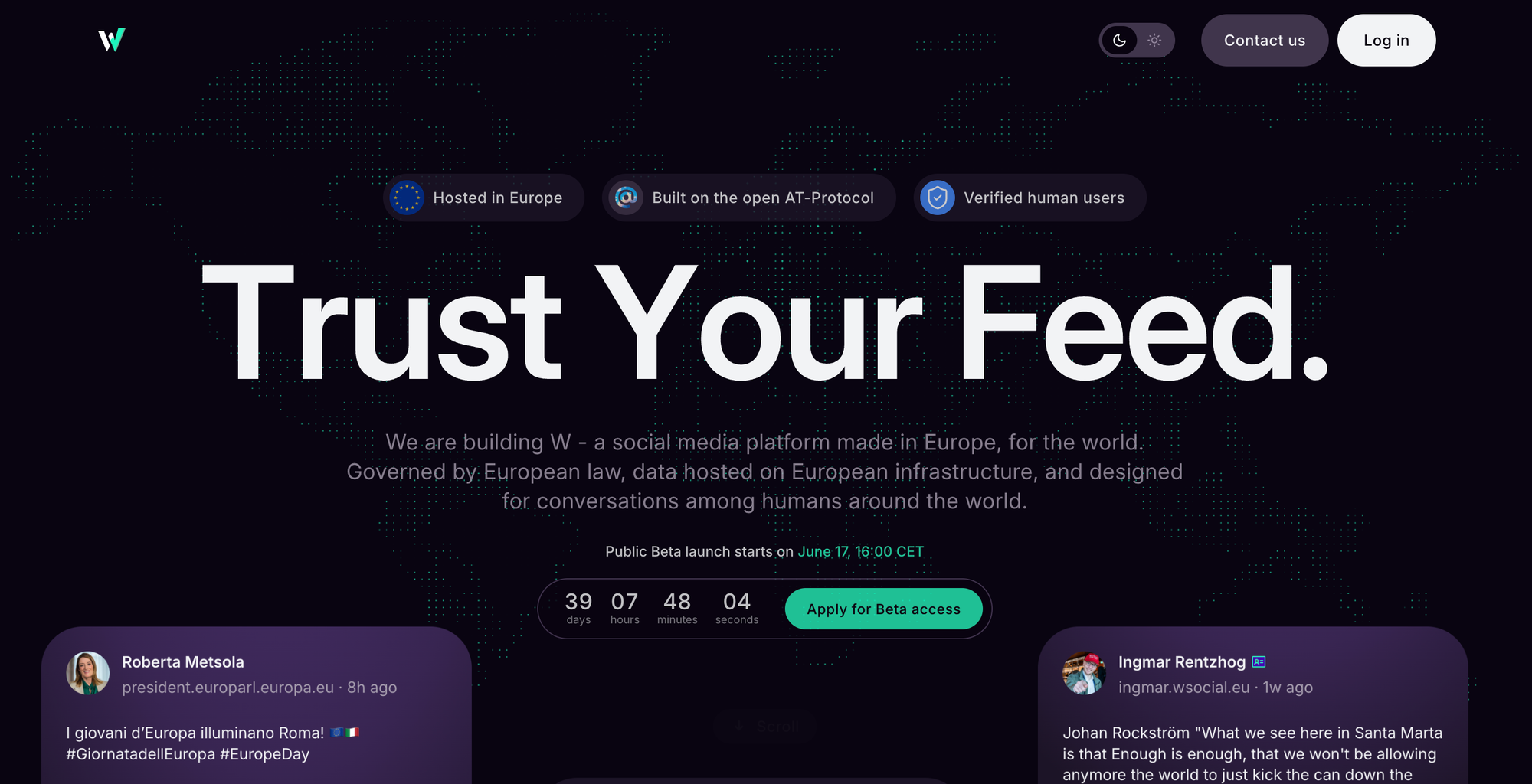
I have been visiting W's website for months and I've read and watched countless interviews by the founders: this is the first time ever that being built on ATproto is publicly acknowledged. So I stand by the claims in my article (the Internet Archive's Wayback Machine would confirm them). Good for W Social for finally being transparent about it (psst W Social, if you're reading this, the correct spelling of AT protocol doesn't use a dash; it's AT Protocol or ATproto, not AT-Protocol).

💓 Did you enjoy this post? Share it with a friend!
👫 Follow me on Mastodon. All my other links are available here: elena.social
💌 If you'd like to say hi, my contact information is here
✏️ If this post resonated with you, leave a comment!