
In the brave new year of 2026, most European public institutions, politicians and infrastructure services (transportation, official weather services, alert systems) continue to broadcast their communications on a closed, proprietary social network owned by the world’s richest man: X (formerly known as Twitter). This network is now known for its strong biases (algorithms that give preference to far-right content) and, even more troubling, the creation of non-consensual pornographic images showing women and children via its in-house generative AI system called Grok. The hosts of The Europeans podcast aptly described X in their most recent episode as a “bot-ridden, alt-right wasteland.”
Now more than ever, Europe needs a public, open communications platform that is accessible to all citizens, without the need for an account; an independent network not subject to censorship due to opaque algorithms or political bias.
In a powerful op-ed titled "The world needs social sovereignty" Mastodon's Community Director Hannah Aubry wrote:
Calls for public institutions to invest in digital sovereignty are increasing across civil society. The term digital sovereignty means that an institution has autonomy and control over the critical digital infrastructure, data, and services that make up their online presence. Up until this point, social media has not been a part of this conversation. We think it is time to change that.
Many governmental organizations and politicians to this day seem to prefer Big Tech platforms (X, Facebook, Instagram) and Bluesky for their communications. Bluesky is technically based on an open protocol (AT Proto) that allows data portability, but 98% of its accounts are still centralized on the Bluesky main server. I have been highly skeptical of Bluesky (even if I've been an early adopter of it) because to me it replicates many of the toxic, problematic behaviors of Big Tech platforms (which I will explore later in this article).
In this essay I will explain why I believe Mastodon / the Fediverse are a far superior fit for public institutions, essential services and politicians; I see three key advantages for this open network based on the ActivityPub protocol: openness, agency and reach.
Reason 1: Openness
(in contrast to Big Tech’s walled gardens)
Did you know that you could read public, federated social media posts using RSS readers?
There is no need for a Mastodon or Friendica or GoToSocial account to read the social media messages the European Commission publishes on its Mastodon account. Why? Any Fediverse profile offers an RSS feed. The European Commission’s Mastodon profile page is available at this address: https://ec.social-network.europa.eu/@EUCommission If you copy and paste it (and add ".rss" to the address bar - thanks for the tip Ruud) into any feed reader, you can start seeing all the public posts published by this account into the feed reader of your choice.
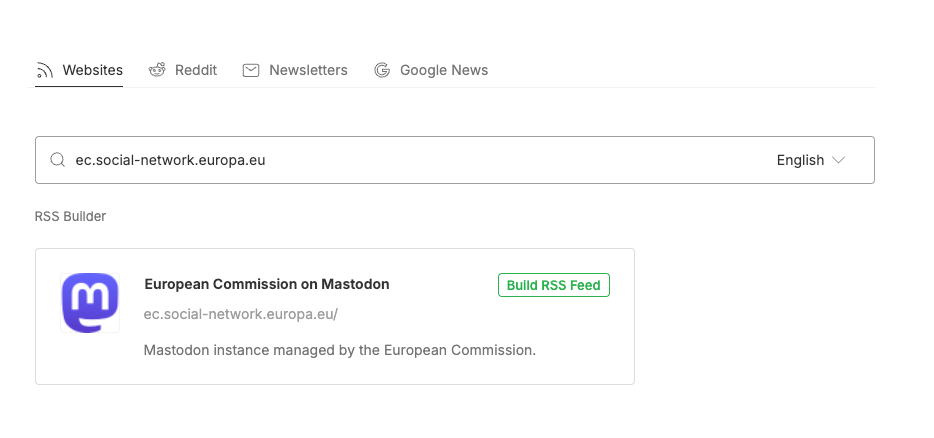
This is the magic of RSS: you do not need a Mastodon or a Fediverse account to read their posts (unless you want to interact with them there).
By contrast, whenever the European Commission publishes a post on Facebook, Instagram, LinkedIn or X, the content is hidden behind a login wall – inaccessible to people who do not have accounts there.
Small Technology Foundation co-founder Aral Balkan wrote about this very issue last week, demonstrating how people who do not use Big Tech social media platforms are locked out of communications happening on Instagram, Facebook and X:
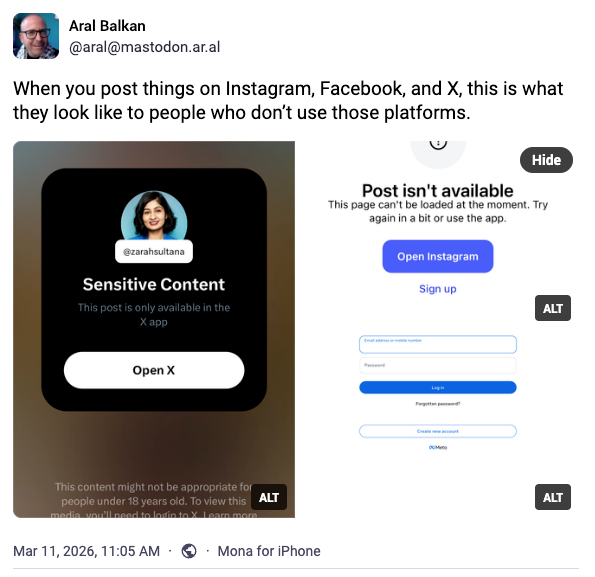
We have been used to these practices for more than two decades. It’s about time we say: enough. This is absolutely unacceptable for communications coming from public institutions, politicians and public infrastructure accounts (I’m thinking of alerts in case of natural disasters, transportation updates and consular services, to name a few). Public institutions are funded by taxpayers' money: their communications serve public interests and should be open to all - without the need of creating social media accounts on proprietary, for-profit closed systems. This is especially salient for European governmental communications: isn’t it absurd that they would require social media accounts owned and run by U.S. based companies?
Why do I think the practice persists to this day? In my personal opinion, it could be a mix of tech illiteracy, resistance to change and possibly hanging on to vanity metrics. It could be hard to leave behind a social media account with hundreds of thousands of followers and start over on a new network - even if the legacy network yields no engagement and is filled with bots.
Ethical European alternatives already exist. And they shine for many additional reasons, aside from openness: agency and reach.
Reason 2: User Agency
(complex, opaque algorithms vs. a chronological feed)
Big Tech social media platforms and – I would also argue – Bluesky fully rely on complex, opaque algorithms to serve posts in their newsfeeds.
The implicit goal of algorithms is to keep users “glued to a screen” for as long as possible for the purpose of seeing more ads. That is how commercial social media platforms are able to sustain their operating costs and to make a profit.
Bluesky hasn’t introduced ads yet - but it may eventually, in order to become profitable. It received $15 million in a series A funding round led by the VC firm Blockchain Capital. This is not a selfless donation to a cause: Blockchain Capital (tagline: “Partners to crypto builders since 2013”) needs to make its investment back at some point – and ads are the easiest way to make it turn a profit. Its new interim CEO Toni Schneider shared in a blog post that "We are very actively thinking about how we will make money, but ads are near the bottom of the idea list." And yet I am reminded of Open AI CEO Sam Altman who changed his stance on ads. In 2024 he declared: "I think of ads as a last resort for us for a business model"; fast-forward to January 2026 and he is currently testing ads in ChatGPT. Netflix followed a similar trajectory.
Monetization issues aside, how do algorithms keep users highly engaged? Simple: by promoting posts that elicit rage or fear or titillate with sensational topics.
People who use these platforms are not in full control; the content they see is dictated by opaque algorithms. And even if Bluesky promises choice with a “pick-your-algorithm” approach, well, algorithms are still king on its platform.
What’s the problem with opaque algorithms? To put it simply, algorithms exploit human weaknesses. In his evergreen article “This Is How Your Fear and Outrage Are Being Sold for Profit” published in July 2017, author Tobias Rose-Stockwell explained that news feeds hack “your attention with emotional packaging.” Rose-Stockwell discussed “affective engagement” arguing that posts that elicit strong emotional reactions - whether good or bad - tend to lead to high engagement and are thus given preferential treatment by algorithms:
The News Feed tends to prioritize content with these affective emotional hacks — they lead to more clicks, likes, shares, and comments. As content producers compete for this type of affective engagement, this battle for attention creates what tech ethicist Tristan Harris has called “a race to the bottom of the brain stem.”
Should important messages by politicians and public institutions compete with titillating or rage-inducing discussions by random accounts one is not even following?
I think not.
By contrast, on Mastodon and the Fediverse news feeds are made up of messages one chooses to subscribe to. This is real agency.
In a recent interview for the aforementioned podcast The Europeans, Mastodon founder Eugen Rochko was asked "Do you think a social media site can ever be algorithmic and ethical at the same time?" This is what Rochko responded (emphasis mine):
That's a complicated question because obviously it all depends on the details, right? What is the algorithm? How does it work? And Mastodon, as any programming application, has lots of algorithms inside it, but the algorithm for the whole feed is very simple. It is chronological in reverse order. That is also an algorithm, but a very simple one. We do have a trending feed, which is how you can find stuff that you wouldn't normally come across, but it is the same for everyone. It is kind of divided by language, so you see trending posts in your own language, and somebody who speaks a different language would see different posts in their language. If we're talking about algorithmic feeds like they are on Instagram, they are kind of addictive. You can't really tell when you've caught up since the last time you looked at it. So you have to scroll and scroll and scroll, and you might not stop until you realize "oh, I'm doom-scrolling" versus if it is the same every time you load it and it is in an order you can predict, then you can scroll through it, see the new stuff, then say "okay, I've already seen this" and then you can just stop scrolling. And this is one way that Mastodon saves you time because it doesn't try to get you to stay on for as long as possible. It's just like, okay, here's what you want to see, now you can move on with your life.
The beauty of the Fediverse is that people can also follow hashtags, populating their timelines with content they are genuinely interested in and discovering new accounts to follow.
European politicians and institutions could harness the power of this feature, creating conversations around important topics that their constituents could follow and participate in.
The Fediverse promotes real choice and agency. AT Protocol may appear to do so on the surface, granting people the ability to add custom feeds (“Choose your own timeline! Feeds built by the community help you find content you love”) but the reliance on mysterious algorithms cherry-picking posts to serve is still troubling.
And then there is the question of reach: who sees your posts?
Reason 3: Reach
Content creators on Big Tech and algorithm-driven social media platforms like Bluesky have to constantly strategize regarding keywords to use or the best time to post a status update; algorithms do not deliver the content to all their followers, but only to a fraction of them.
Sure, one could say that Bluesky offers a “Following” feed, showing posts by accounts one follows, ordered chronologically, but I would argue that very few people are using those. I have almost 1200 followers on Bluesky and when I was active on it, it was very common to get no reactions at all to my posts. Nothing, zero. Similarly friends on the platform - some with 6000 or 10000 followers - often have little to no reactions to many of their posts. If most people on Bluesky used the "Following" chronological feed as their default feed, this couldn't possibly happen. To me the lack of engagement on Bluesky - despite a relatively high number of followers - is a sign that most users prefer feeds run by opaque algorithms surfacing "interesting" (aka: with high affective engagement) content from all over the network.
The contrast between Bluesky/ATProto and the Fediverse is truly stark.
For example: the tech journalist Casey Newton (founder of Platformer) has over 250,000 followers on Bluesky - and yet, he often has only a handful of “boosts” and comments to his posts:
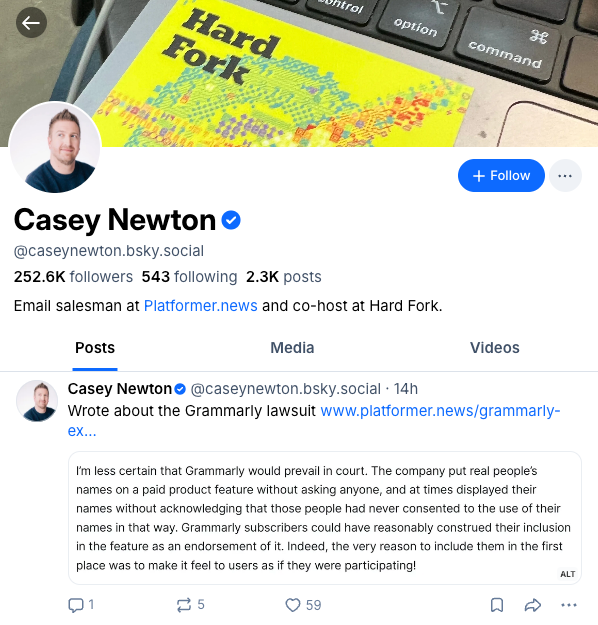
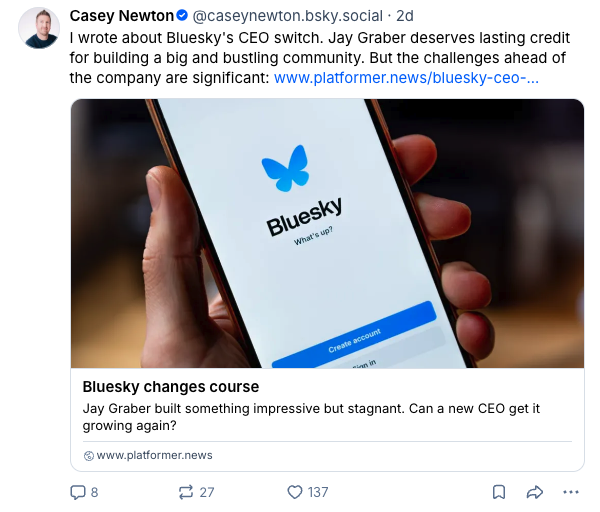
screenshots from Casey Newton's Bluesky account showing he has 252 thousand followers but often just a handful of replies and boosts to his posts
By contrast, with “only” 12,000 followers on the Fediverse I often have hundreds of boosts and replies to my posts:
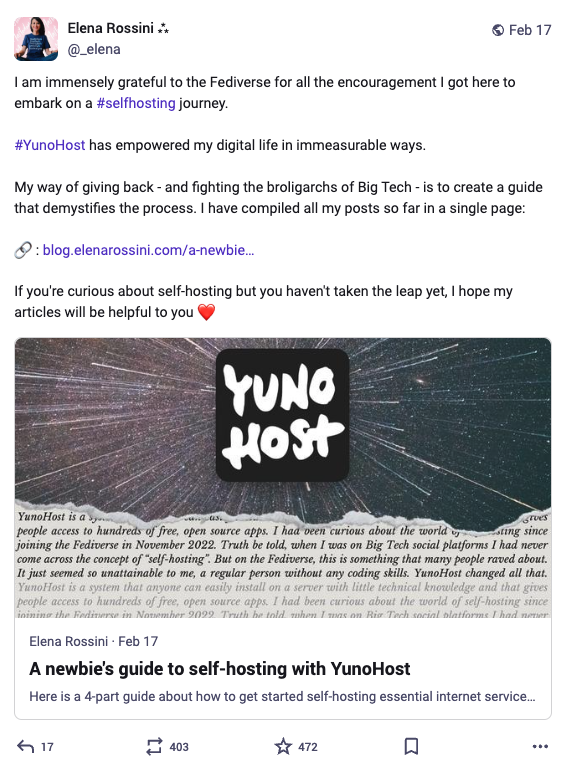
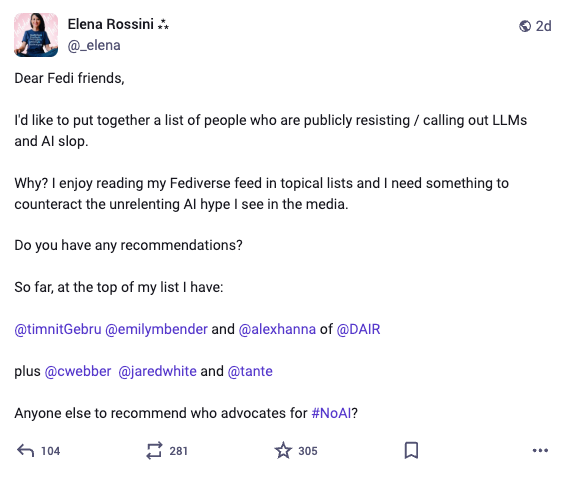
screenshots from my Mastodon profile showing I have 12000 followers... and often hundreds of boosts and likes. A recent post of mine had 104 replies
On Wednesday I was offline for most of the day and when I opened the iOS app Ivory in the evening, I saw a red bubble indicating I had 173 replies to one of my posts - which had accumulated over the course of 9 hours.
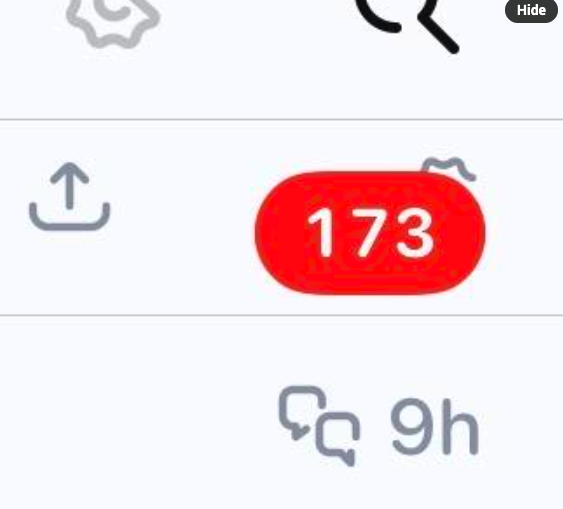
I would argue that a chronological news feed results in more reach and transparency.
Conclusion: +1 for a true, open public square
Should your public institutions and politicians share messages on social networks ruled by opaque algorithms? Or on one that puts an emphasis on user agency and transparency, with chronological feeds?
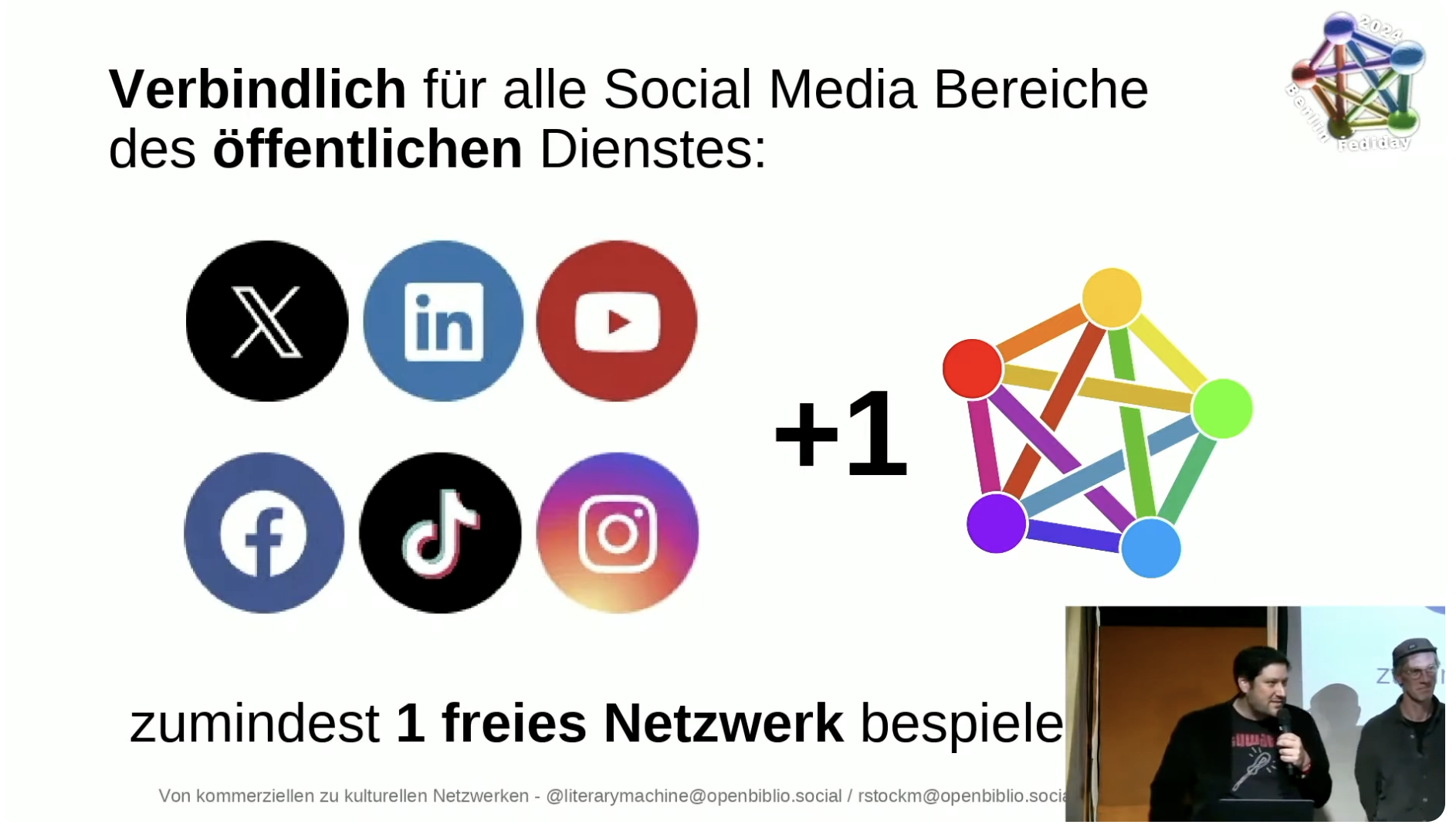
It doesn't have to be either/or: Ralf Stockmann, Director of Digital Development and Network Affairs at ZLB (Central and State Library Berlin Foundation - the largest public library in Germany) proposed a +1 communications strategy for public institutions during a presentation at Berlin Fediverse Day in 2024 (video).
Stockmann suggested public institutions keep using all their Big Tech social media profiles but add at least one free, open network - not simply repurposing content, but "taking it seriously", learning and adjusting to the culture of the Fediverse (and not simply treating it as yet another X or Instagram).
Currently few public institutions have adopted this approach. In an effort towards transparency and accountability, the website of the European Commission allows the public to search a social media database with granular controls: one can see how many people working within the European Commission have accounts on X, Facebook, Bluesky, Mastodon and other social media networks - with links to them:

Sadly there are 445 European Commission members and institutions still active on Elon Musk's X. 309 on Mark Zuckerberg's Facebook, 163 on Instagram, 6 on Threads. A Mastodon search only yields two results, but the page may be outdated - with more commissioners regularly joining the Fediverse.
From my personal observations - looking at the social media accounts that the European Commission follows on Bluesky - this algorithmic platform, based on AT Protocol - is far more popular than the Fediverse for its official members:


Bluesky accounts can be bridged to the Fediverse with the tool Bridgy Fed but in order to serve the public interests of European citizens, I would think that a wiser strategy would be for the European Commission to focus its communication efforts on the Fediverse instance they fully control... and if they wanted to "bridge" their content to Bluesky, they could do so (thus going from the Fediverse to Bluesky and not the other way around). An example is the social media account of Spanish journalist Thiago Ferrer Morini who bridges his Mastodon account to Bluesky.
The European Commission already has a popular active account on the Fediverse:

I suppose a way to encourage them to stay engaged there is to make them feel seen and valued.
How?
With positive comments and reactions to their posts instead of nitpicking and criticism - for which I have been guilty in the past.
My friend Sandra Barthel, co-founder of the alliance Open Networks and Democratic Public Spheres, emphasizes the importance of public funding for open European social networks (30 million Euros annually for a "Fediverse fund" is one of the alliance's key demands). For Sandra, we must make sure that European organizations or private companies receiving public funding for the goal of social and digital sovereignty must genuinely commit to openness:
National or European stacks which are presented by European governments or initiatives, like the "Deutschland Stack" (German stack) or debates over "Eurostacks" are lacking a clear focus on open-source software, open standards and open interfaces. Therefore such suggestions aren't sustainable. Instead, we should fund collaborative open projects involving European and international developers and non-developers, ensuring public money benefits the public good and not only private interests.
Consider the possibilities: making the Fediverse a genuine public utility that fulfills the internet's original promise, connecting people and serving their interests... free from commercial imperatives.
Where do we start? One step at a time. Adding the Mastodon icon to the European Commission website's footer - alongside X, Facebook, and other U.S. based social media platforms - would have two powerful benefits:
- it would signal the European Commission's commitment to a free, interoperable, privacy-respecting European social platform;
- it could introduce Mastodon to European citizens unfamiliar with it, thus raising awareness of a viable alternative to Big Tech social platforms.
What do you think?
I look forward to hearing your thoughts and suggestions.
Elena
Related materials:
- Essay: Hannah Aubry: "The world needs social sovereignty"
- Website: Open Networks and Democratic Public Spheres
- Social Media: follow Open Networks and Democratic Public Spheres on Mastodon
- Video: FOSDEM 2026: "The Fediverse and the EU's Digital Services Act: solving the challenges of modern social media?"

💓 Did you enjoy this post? Share it with a friend!
👫 Follow me on Mastodon. All my other links are available here: elena.social
📽️ If you'd like to support my work, you could buy or rent my documentary The Illusionists on the globalization of beauty
💌 If you'd like to say hi, my contact information is here
✏️ If this post resonated with you, leave a comment!